DIPLODOCUS
Diplodocus longus
Meaning: "Double Beam"
📊 STATS
Size comparison:
As long as three school buses parked end-to-end!
📖 ABOUT DIPLODOCUS
Meet Diplodocus, the super long dinosaur! This gentle giant munched on plants and roamed North America during the Jurassic period. Imagine a dinosaur longer than a firetruck!
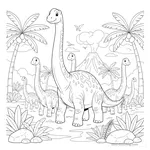
Diplodocus was one of the longest dinosaurs to ever walk the Earth! Its name means 'double beam,' which refers to special bones on the underside of its tail. These bones helped support its super long tail, which it may have used like a whip to defend itself or communicate with other Diplodocus. Imagine cracking a whip that's as long as a car! Diplodocus lived during the Late Jurassic period, munching on plants like ferns, cycads, and conifers. It had peg-like teeth in the front of its mouth, perfect for stripping leaves off branches. Because Diplodocus was so big, it probably ate a LOT of plants every day! Although it was a quadruped, walking on all fours, its front legs were shorter than its back legs, giving it a slightly sloping appearance. Scientists believe Diplodocus traveled in herds, which helped protect them from predators like Allosaurus. Discoveries of Diplodocus fossils have been made in several states in the USA, including Colorado, Montana, Utah, and Wyoming, giving us a good idea of where these amazing creatures once roamed.
🔬 CLASSIFICATION
- Group
- Sauropoda
- Family
- Diplodocidae
- Period
- Late Jurassic (163-145 Ma)
- Era
- 154.0 - 150.0 million years ago
🗺️ DISCOVERY
- Year
- 1878
- Discovered by
- Othniel Charles Marsh
- Location
- Colorado, USA
- Fossils found in
- USA (Colorado, Montana, Utah, Wyoming)
🎨 SCIENTIFIC ILLUSTRATION
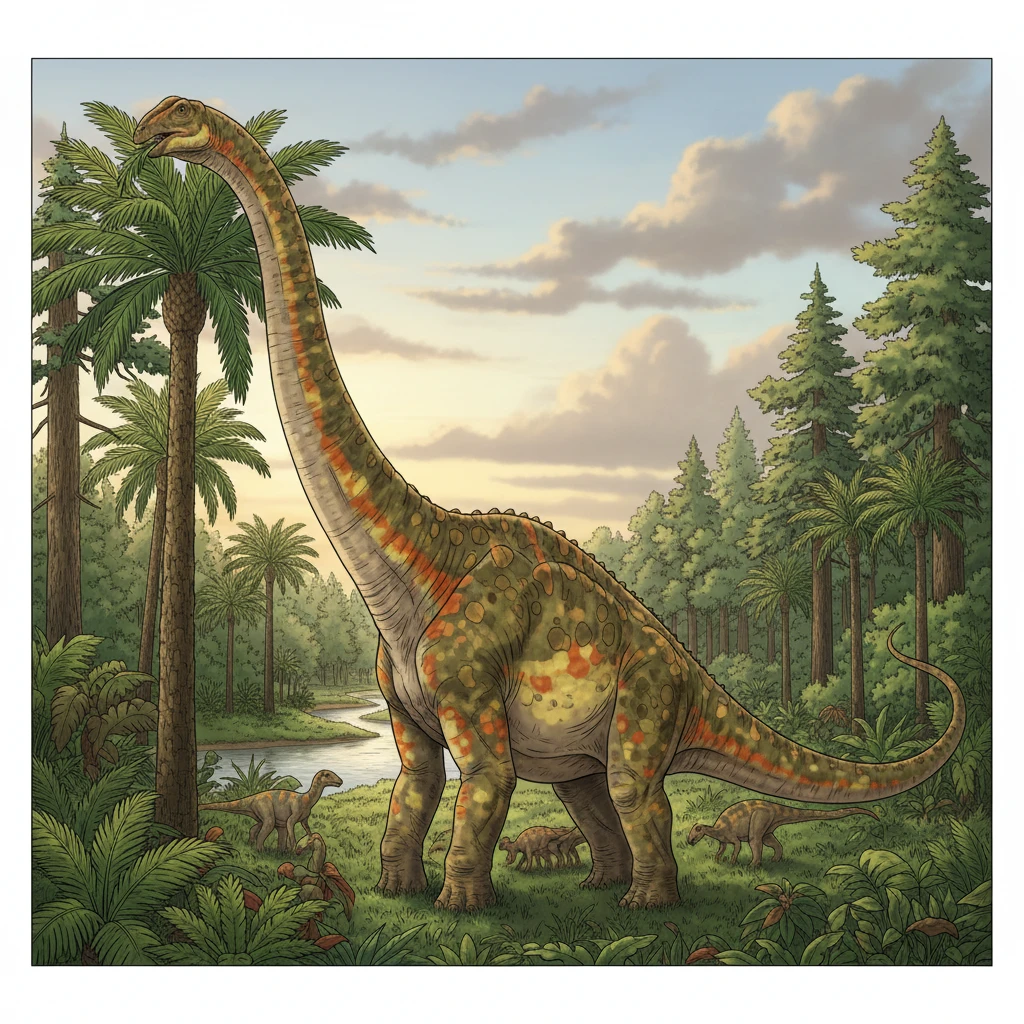
Artistic reconstruction of Diplodocus based on fossil evidence
🗺️ WHERE FOSSILS WERE FOUND
USA (Colorado, Montana, Utah, Wyoming)
🤓 FUN FACTS
- ✨ Diplodocus had nostrils on top of its head!
- ✨ Its neck was so long it could reach the tallest trees!
- ✨ Diplodocus teeth were only in the front of its mouth, like a rake!
- ✨ Baby Diplodocus grew super fast to avoid becoming snacks for predators!
- ✨ Scientists think Diplodocus might have made a loud booming sound with its tail!
💡 DID YOU KNOW?
Get this: Diplodocus probably swallowed rocks to help grind up its food in its tummy! These rocks are called gastroliths, and they worked like a dinosaur-sized stomach mill!